Nationwide provides customizable protection from accidents and other unexpected losses. When you get an AgriChoice® farm insurance policy, you’re also getting protection for your livestock. This coverage includes animals such as cows, bulls, bison, swine, goats, lambs, sheep and poultry.


All farm and ranch insurance Insurance by farm type
Property and liability insurance
Vehicles and equipment insurance
Financial services
All farm and ranch insurance All commercial agribusiness insurance All agribusiness risk management
Livestock insurance
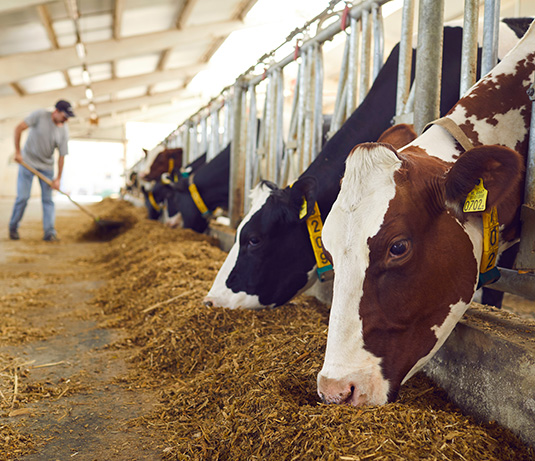
Livestock insurance provides protection from broad causes of loss and is available for livestock as well as livestock property and equipment, with the maximum amount payable per head determined by how your livestock is insured. Covered causes include:
- Fire
- Lightning
- Floods
- Loading and unloading accidents
- Sudden and accidental collisions causing death
- Electrocution
- Attacks by dogs or wild animals (sheep are not covered for this specific peril)
- Accidental shootings
- Earthquakes
Individual
Listing animals individually may be the right option if you have higher-valued animals you want to cover up to a specific dollar amount. They can be identified in whatever manner you use on your farm or ranch, including ear tag numbers, RFID tag numbers, names or unique descriptions.
Blanket
With a blanket policy, all your farm personal property is insured in one policy, including livestock, equipment and supplies.
Herd
The most common way to cover livestock is to insure them as a herd; for example, a 100-head beef or dairy herd.
General farm insurance policies like AgriChoice don’t provide coverage for livestock and poultry losses caused by:
- Disease
- Old age
- Natural causes
If you’re interested in covering these losses, talk to your agent about livestock mortality insurance available in a separate policy from another insurer. AgriChoice policies cover losses when animals are struck by a vehicle or accidentally shot.
Additional coverages for your livestock
Unfounded animal abuse allegations
Every AgriChoice policy provides protection against unfounded animal cruelty lawsuits at no additional cost. Reimbursement up to your endorsement limits help offset attorney fees in the event of a not-guilty verdict in a lawsuit.1 Unfounded animal abuse allegation protection applies to both civil and criminal claims.
Newly acquired livestock
Though not typically covered under livestock insurance policies, most farm insurance policies provide an automatic extension of farm personal property to cover newly acquired livestock animals. Report newly acquired animals within the time frames specified in your insurance policy, and work with your agent so you’re informed on coverage limits and reporting requirements for new newly acquired livestock.
Livestock industry insights
Explore how the cycle of herd expansion and contraction affects prices and rancher decisions.
Learn how a South Dakota cattle ranching family diversified into bison production and direct-to-consumer sales.
Discover how manure digesters convert livestock waste into renewable energy.
Explore the partnership focused on preventing deadly manure pit accidents.
Livestock insurance frequently asked questions (FAQs)
The price of livestock insurance isn't fixed; it changes based on several factors. Your cost depends on the type of animals you're insuring, such as cattle or swine, along with their age and value. The more risks your policy covers, the higher the price. Other factors that influence your premium are the size of your herd, your farm's location and your past claims. To get the most accurate cost, you should talk to an insurance agent who can give you a quote tailored to your specific needs.
While often used interchangeably, animal mortality insurance is a specific type of coverage that falls under the broader category of livestock insurance. Mortality insurance specifically pays you for the death of your animals from covered events such as accidents. By contrast, livestock insurance is a more comprehensive plan that can include mortality coverage, plus additional protections for things such as theft, veterinary expenses or loss of use.
Livestock insurance provides financial protection for your animals through a policy you purchase. You pay regular premiums, and in return, the insurer agrees to compensate you for covered losses, such as animal deaths from disease or accidents. When a loss happens, you file a claim for the company to review. To make it work for you, it's essential to know what your policy covers and to work with an agent to get the right coverage for your specific needs.
Nationwide teams up with livestock associations to protect ranchers
Nationwide is proud to serve as an Allied Industry Partner of the National Cattlemen’s Beef Association—the nation’s oldest and largest cattle industry organization. We also collaborate with esteemed organizations such as the North Dakota Angus Association, South Dakota Angus Association, South Dakota Hereford Association and South Dakota Simmental Association.
Ready to get started?
[1] Reimbursement for "defense expenses" is provided only if the insured prevails in the "animal cruelty claim" and the matter is finally adjudicated without a finding of guilt or liability. There will be no reimbursement under this endorsement if the "animal cruelty claim" is settled for consideration, if the insured admits guilt or wrongdoing, is convicted or pleads guilty.